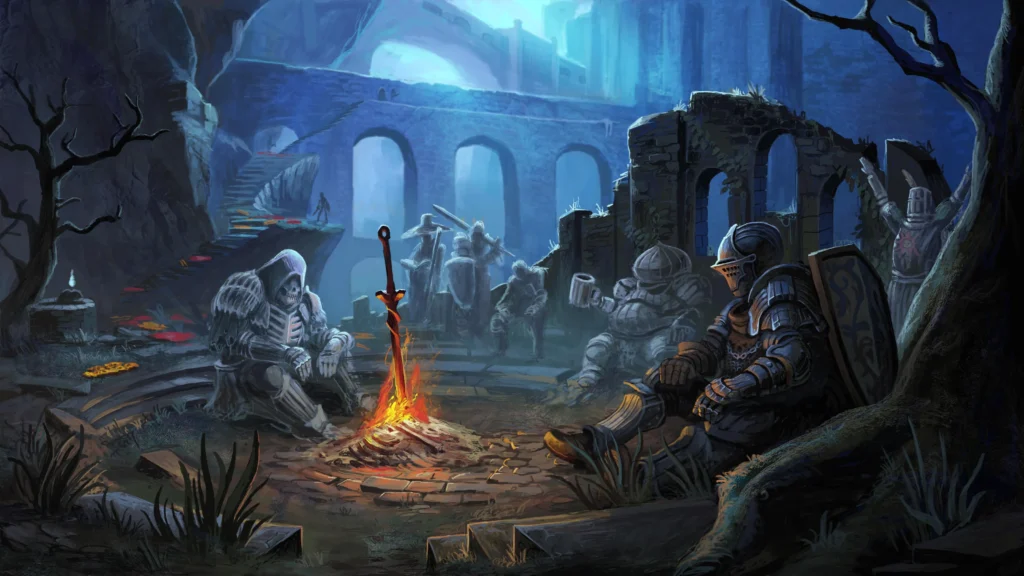
For years, Dark Souls was something I admired from a distance. I knew its reputation, its influence, its near-mythic status in gaming culture. Yet I avoided it, not out of disinterest, but out of misunderstanding. I assumed difficulty was its defining trait. I was wrong.
My journey into FromSoftware’s worlds began with Elden Ring and later Nightreign. When Elden Ring first released, I bought it on hype alone and bounced off almost immediately. I defeated Rennala, but something felt off. Not because the game was too punishing, but because I didn’t yet understand what it was asking of me. I put it down, convinced that perhaps these games simply were not for me.
It wasn’t until nearly a year later, shortly before the DLC released, that I returned. This time, something clicked. I stopped approaching the game as a series of obstacles to overcome and began engaging with it as a space to inhabit. The systems, the silence, the sense of discovery all fell into place. I finished Elden Ring in that same month, and to this day I consider it one of the most captivating and singular experiences I have had in gaming.
After that, I told myself I would work backward. Dark Souls, Dark Souls II, Bloodborne. But after spending roughly 150–175 hours immersed in Elden Ring and its expansion, I needed distance. That distance grew longer when Nightreign was announced. I waited again. In hindsight, I am glad I did. Nightreign became my game of the year for 2025, a rare blend of challenge and camaraderie, and one of the most memorable multiplayer experiences I have had.
At the start of 2026, while writing down personal goals, I finally committed to finishing what I had postponed. I bought Dark Souls.
From the opening hours, it was clear this was something different. Not merely an earlier iteration of Elden Ring, but a work with its own philosophy. Dark Souls is not concerned with scale in the same way. Instead, it is obsessed with cohesion. The world folds inward on itself, patiently revealing its logic. Few moments in gaming compare to realizing that Firelink Shrine is not just a hub, but a nexus. Riding an elevator from the Undead Parish and suddenly understanding where you are in relation to where you began feels revelatory. These are not scripted moments. They are realizations, and they belong entirely to the player.
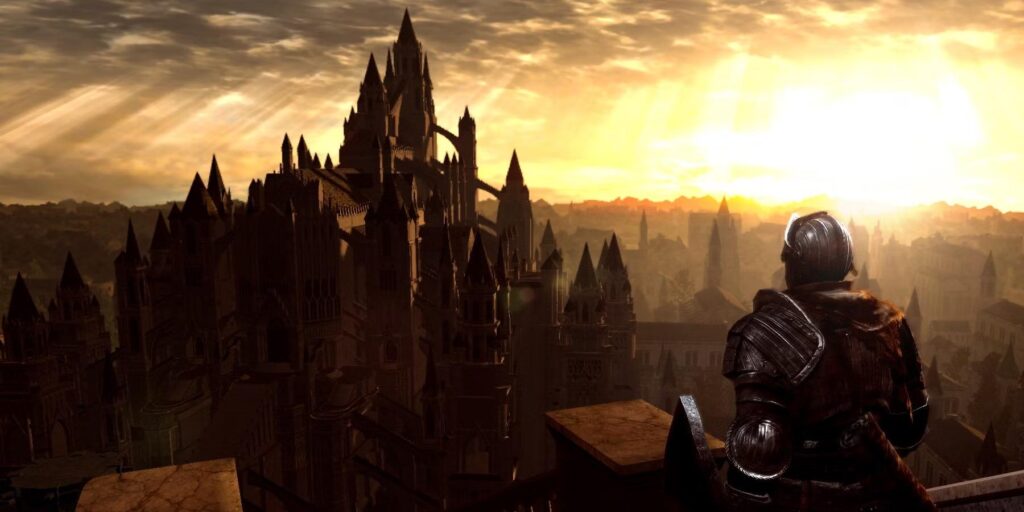
Then there is Anor Londo. After enduring decay, darkness, and ruin, stepping into that radiant city is staggering. It is not simply beautiful; it is symbolic. It feels earned. I remember stopping entirely, not to progress, but to take it in. That moment alone justified everything that came before it.
The combat, while less refined than later entries, remains deliberate and demanding. It requires a different kind of attention. Because of my experience with Elden Ring and Nightreign, many of the bosses felt manageable, with the notable exception of the DLC encounters, which demanded patience and discipline. Interestingly, it was often the regular enemies and level traversal that proved more dangerous. Dark Souls does not let you relax between bosses. The world itself is the challenge.
One aspect I felt conflicted about was the boss runbacks. By modern standards, they are inconvenient and at times frustrating. Yet, over time, I came to understand their purpose. They force reflection. They discourage recklessness. They ensure that when victory comes, it is not accidental. You arrive at a boss prepared, not hopeful.
By the time the end credits rolled and I chose to link the fire, I felt a quiet sense of closure. Not triumph, not relief, but understanding. Dark Souls is not merely difficult. It is intentional. Every system, every shortcut, every silence serves a purpose.
I regret not playing this game earlier, but I am grateful that I played it when I was ready to appreciate it fully. Dark Souls is a masterpiece, not because it is unforgiving, but because it trusts the player to learn, to observe, and to persist.
Now, I move on to Dark Souls II, fully aware of its reputation, yet open to what it has to offer.
ZP
Leave a Reply